The Evening Wind-Down Protocol: A Complete 90-Minute Guide

The transition from the alertness of the day to the stillness of sleep is not a switch—it is a gradient. The nervous system requires time to move from the sympathetic activation of work and stimulation to the parasympathetic dominance needed for sleep onset. The 90 minutes before bed is not a neutral period that sleep simply fills—it is the window in which sleep quality is largely determined.
The 90-Minute Wind-Down Protocol
| Time Before Bed | Action | Purpose |
|---|---|---|
| T-90 min | Dim all artificial lighting to 10% or below | Allows melatonin to begin rising |
| T-90 min | Close all work applications; write tomorrow's three priorities | Offloads open loops from working memory |
| T-75 min | Hot bath or shower (40–42°C for 20 min) | Core temperature drop post-bath accelerates sleep onset |
| T-60 min | Herbal tea (chamomile, valerian, lemon balm, or passionflower) | Mild GABA activation; ritual signals sleep |
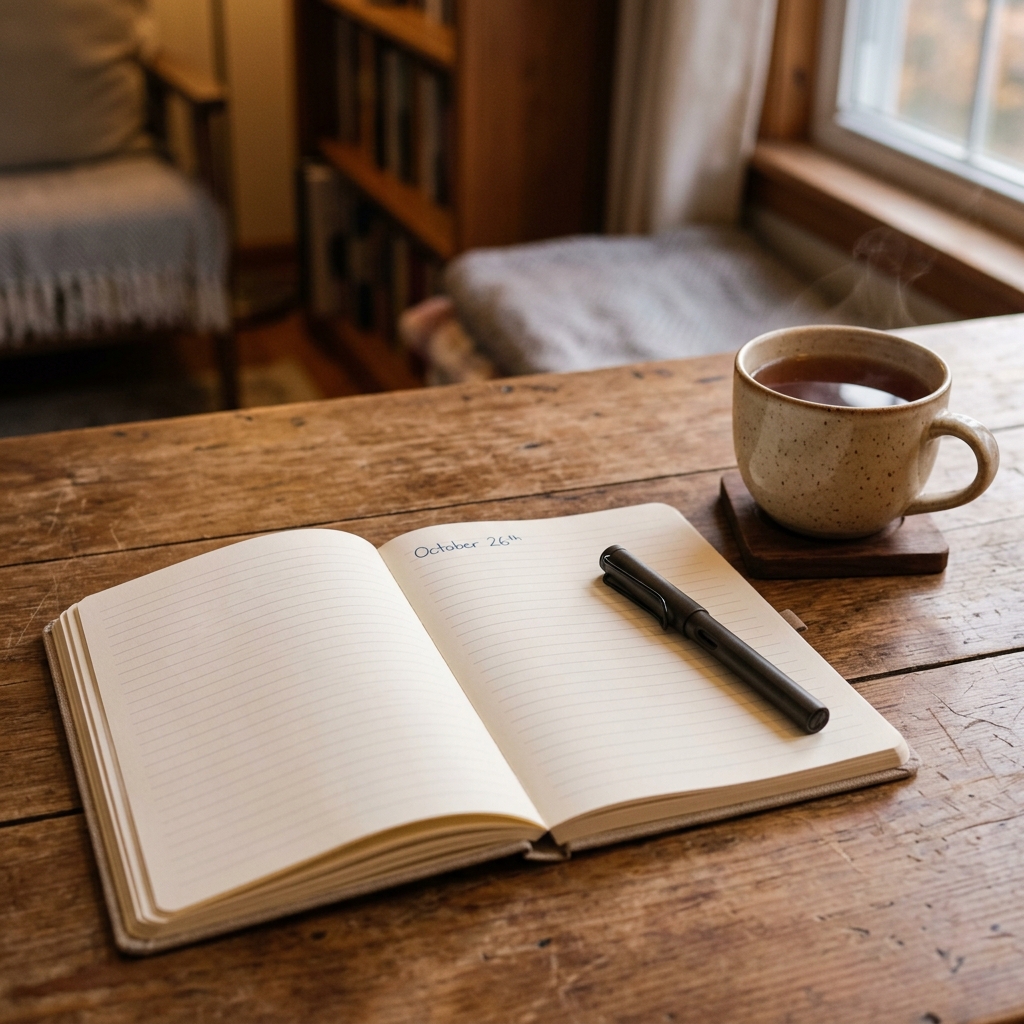
| T-45 min | Light reading (physical book) or journaling | Cognitive deceleration without screen exposure |
| T-30 min | 4-7-8 breathing or body scan meditation (10 min) | Parasympathetic activation |
| T-15 min | Bedroom: cool (16–19°C), dark, silent or white noise | Optimal sleep architecture conditions |
| T-0 | Bed with no phone. No «one more check». | Stimulus control preserved |
The Shutdown Ritual
Cal Newport, author of Deep Work, describes a «shutdown ritual»—a specific phrase or action that signals to the brain that work is complete and the evening is beginning. The ritual matters because the brain's task-management system (the zeigarnik effect) keeps unfinished tasks in working memory, generating background anxiety. Writing tomorrow's priorities and saying aloud «shutdown complete» is not quirky—it is a cognitive closure technique with a solid evidence base.
«A consistent pre-sleep routine is one of the most powerful signals you can send your circadian clock. It tells the brain: the day is closing, recovery is beginning.» — Matthew Walker PhD, UC Berkeley
Adapting to Your Chronotype
Evening chronotypes (night owls) naturally experience a delayed melatonin rise—often 1–2 hours later than morning types. If you struggle to fall asleep before midnight, the wind-down protocol combined with consistent morning sunlight is the most evidence-supported non-pharmacological method for advancing your sleep timing.