How to Build a Daily Routine That Actually Sticks (And Why Most Fail)
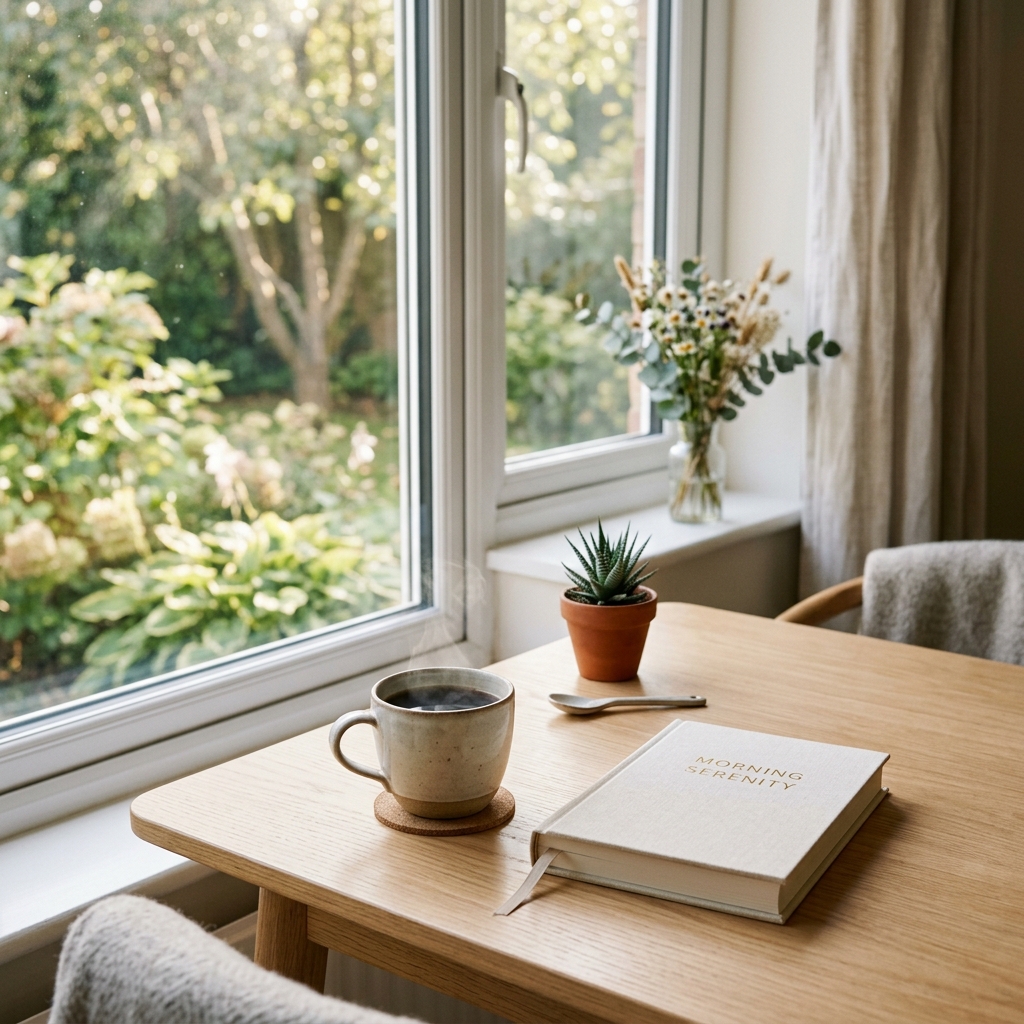
Most people who want a daily routine already know what they should be doing. Wake up earlier. Move more. Eat properly. Spend less time on their phone. The problem is not information — it is the gap between knowing and actually doing it consistently, every day, even when motivation is gone.
That gap has a name: it is the difference between motivation and structure. Motivation is a feeling, and feelings fluctuate. Structure holds when feelings do not. The people who show up for their daily habits consistently are not more disciplined than you — they have built better structures.
Why Do Most Daily Routines Fail Within Two Weeks?
The most common reason is overbuilding. Someone decides to change their life and creates a 90-minute morning routine from scratch — gym, journaling, meditation, cold shower, healthy breakfast — tries to implement all of it simultaneously, maintains it for a week on initial motivation, misses one day, feels like a failure, and abandons the entire structure.
The neuroscience of habit formation explains why this happens predictably. New habits require deliberate cognitive effort until they become automatic (encoded in the basal ganglia as procedural memory). Deliberate cognitive effort depletes. If you demand deliberate effort for five new habits simultaneously, your cognitive resources exhaust long before any of the habits have had time to become automatic.
Research by Phillippa Lally at University College London found that single habits take an average of 66 days to automate — not 21 days as is commonly claimed. Building one habit before adding the next is not slow — it is the only approach that produces lasting change.
What Is the Difference Between a Routine and a Ritual?
This distinction matters more than it might appear. A routine is a sequence of scheduled actions. A ritual is a sequence of actions that carries meaning — something you do because of what it represents or produces for you, not just because it is scheduled.
Nordic wellness culture uses the word ritual deliberately for daily habits because the word implies relationship and intention. A ritual is not a task to be ticked off. It is something you build a relationship with over time. This framing measurably affects adherence: research on motivation consistently shows that intrinsic motivation (doing something because it is meaningful to you) produces more durable behaviour change than extrinsic motivation (doing it because you should). When a habit becomes a ritual — something you do because of what it gives you, not because of external pressure — missing it starts to feel like a loss rather than a relief.
How Many New Habits Can You Build at Once?
One is ideal. Two if they are closely linked and one naturally triggers the other — this is called habit stacking. "After I make my morning coffee, I will sit with it for 10 minutes without my phone" uses the existing habit (coffee) as the trigger for the new one (screen-free quiet time). The sequence takes hold faster because it borrows the automation of the existing behaviour.
Habit stacking is how Nordic daily rituals naturally compound: the morning coffee leads to the quiet moment, which leads to the brief intention-setting, which leads to the outdoor walk. None of these required a separate decision — each triggers the next through associative memory. Build the chain one link at a time.
What Should a Good Morning Routine Actually Include?
| Morning Element | Time Required | Why It Matters |
|---|---|---|
| No phone for the first 10 minutes | 0 minutes (an absence) | Protects the cortisol awakening response; prevents starting the day in reactive mode |
| Water before coffee | 2 minutes | Rehydration after 7–8 hours; prevents the caffeine-on-dehydration energy crash |
| Outdoor or window light exposure | 5–10 minutes | Most powerful circadian anchor; determines when melatonin releases that evening |
| Brief movement | 5–10 minutes | BDNF release; increased prefrontal blood flow; measurable cognitive boost for 2–4 hours |
| One intention or reflection moment | 1–2 minutes | Engages the prefrontal cortex before reactive inputs take over; sets directional focus for the day |
This is a 20-minute morning. It does not require a 5 AM alarm or a gym. It requires only deciding that these things happen before email, social media, or other people's agendas. That single boundary — protecting the first 20 minutes of your day — is the foundation from which everything else compounds.
What Should a Good Evening Routine Include?
The evening routine determines the quality of tomorrow's sleep — and therefore the ease of tomorrow's morning routine. The evening is not where discipline ends; it is where the next cycle begins.
- A fixed "screens down" time: Your brain needs 60–90 minutes of reduced light and stimulation before sleep onset can happen physiologically. Choose a time and protect it — not occasionally, but as a default.
- A brief day-closure practice: Writing three things that went well, or the one thing you will address first tomorrow, offloads the open cognitive loops that activate during sleep and cause the lying-awake overthinking most people experience.
- A warm drink ritual: The preparation and drinking of a warm non-caffeinated drink (chamomile, lemon balm, warm water) creates a sensory anchor — a paired stimulus that the brain begins to associate with the approach of rest. Over weeks, the cue itself begins to trigger the relaxation response.
- A consistent sleep window: Within a 30-minute target range. Consistent sleep timing is the single most powerful circadian anchor, outperforming supplements, techniques, and most behavioural changes.
How Do You Build a Routine When You Feel Like You Have No Discipline?
The question contains the misconception. You do not need discipline to start a routine — you need a design that demands as little discipline as possible. The goal of good routine design is to remove every decision that willpower would otherwise have to make.
Lay out your workout clothes the night before. Put water on your bedside table. Set a single phone-free alarm with no other notifications active. Make the desired behaviour the path of least resistance, and make the competing behaviour (scrolling, snoozing, skipping) the path of greater resistance. This is called environmental design, and it is consistently more effective than motivation as a behaviour-change mechanism — because it works even when motivation is absent.
"You do not rise to the level of your goals. You fall to the level of your systems." — James Clear, Atomic Habits
What Do You Do When You Miss a Day?
Resume the next day without treating the miss as evidence that you cannot do it. Research on habit formation shows that a single missed day does not meaningfully disrupt habit formation — what disrupts it is treating the miss as failure and abandoning the attempt. The critical behaviour is not perfect adherence. It is consistent return.
The Nordic principle behind this is sisu — the Finnish concept of resilient continuation. Not the absence of difficulty or failure, but the quiet decision to continue regardless. Your routine does not need to be perfect to work. It needs to be returned to.
How Long Before a Routine Starts to Feel Natural?
Research suggests 60–90 days for a single habit to feel automatic rather than effortful. For a multi-habit morning routine, allow longer. The subjective experience shifts gradually: at week one, everything feels deliberate; at week three, some elements start to feel familiar; at week eight, skipping the routine starts to feel worse than doing it. That shift — from effort to identity — is when the routine has taken hold.
Conclusion: The Routine Is Not the Goal — What It Makes Possible Is
A daily routine is not a productivity tool. It is a structure that reduces the energy cost of good decisions so that energy is available for everything else. Start with one element. Add the next when the first feels automatic. Protect your morning from reactive inputs. Close your evening with intention. Measure the difference between how you feel with the structure and without it — that gap is the argument for keeping it.
For a deeper foundation, read our guides on the science of morning rituals, the 5-minute evening ritual, and the sleep hygiene system that makes mornings easier.