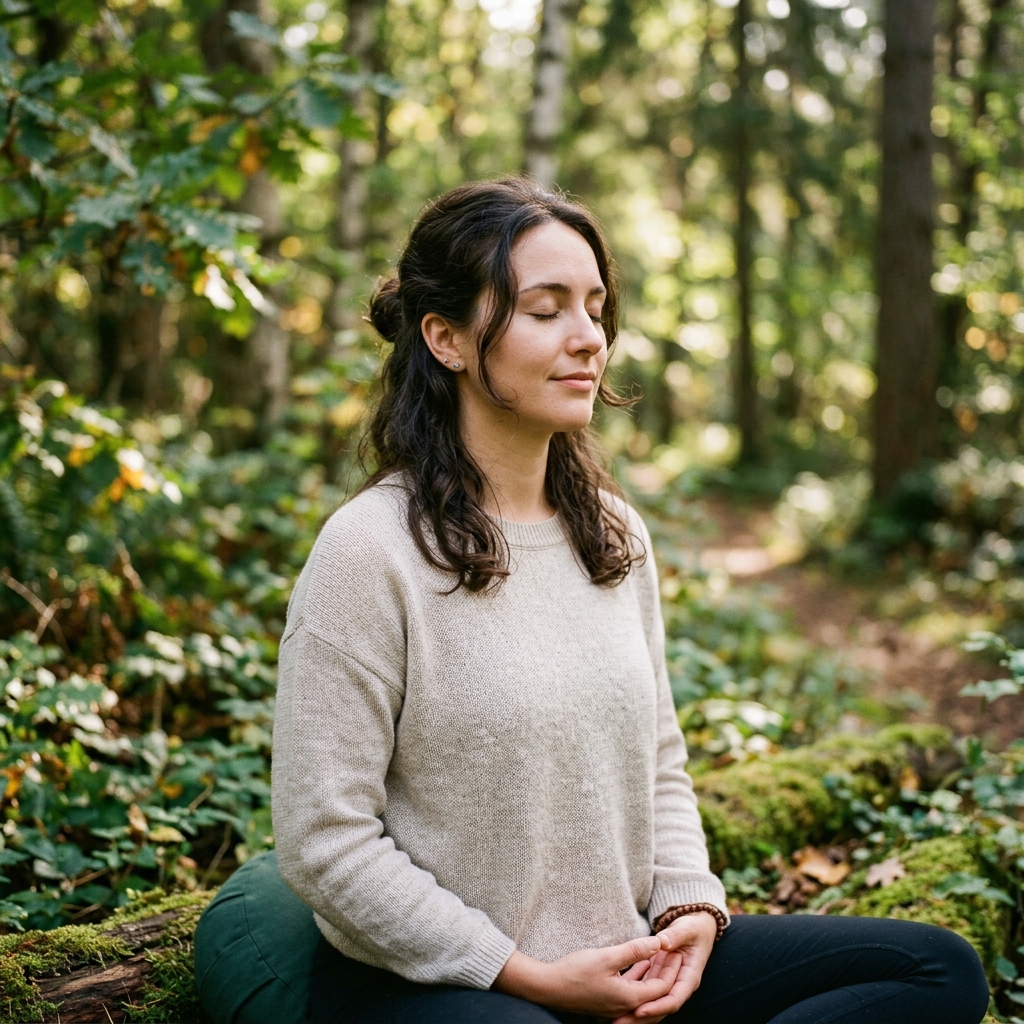
How to Improve Your Mood When You're Feeling Low: 7 Methods That Work

Mood is not a choice. But the conditions that support or drain your mood are things you have real influence over — more than most people realise, and more reliably than waiting for motivation or for something good to happen on its own.
These are not "just think positive" suggestions. These are the interventions with the strongest evidence behind them — things that measurably change your neurochemistry when applied, regardless of whether you feel like applying them.

Why Does Your Mood Keep Dropping Without an Obvious Reason?
Most people experience mood fluctuations without being able to identify a clear cause, which is disorienting because if you can't see why you feel low, you can't address it. But the causes are almost always present — they are just invisible from inside a single bad day.
The most common hidden drivers of recurring low mood: insufficient or fragmented sleep (which directly reduces the brain's capacity for emotional regulation), too little physical movement, insufficient daylight exposure, chronic mild dehydration, and too little genuine social contact. None of these feel like "the cause" of anything — they feel like background facts of life. But combined, they create the biochemical conditions for persistent low mood.
The pattern only becomes clear when you track your mood alongside these variables over two to three weeks. "I just feel low sometimes for no reason" becomes "I consistently feel low after two consecutive nights under 6 hours, or after days when I don't go outside." That specificity is where real change begins.
What Is the Fastest Way to Improve Your Mood Right Now?
Movement — specifically, any aerobic movement that elevates your heart rate moderately for 10–20 minutes. The neurochemical mechanism is well-documented: aerobic exercise triggers endorphin release, increases dopamine and serotonin levels, and produces BDNF (brain-derived neurotrophic factor), which improves neural connectivity in regions responsible for emotional regulation.
The effect is acute and reliable. A 2019 meta-analysis in JAMA Psychiatry found exercise interventions produced significant reductions in depression and low mood across all demographic groups, with effect sizes comparable to antidepressant medication for mild-to-moderate depression. The threshold for effect was low: 10–30 minutes of moderate-intensity movement, three or more times per week.
You do not need a gym or a plan. A brisk walk outside meets the threshold and adds the compounding benefits of natural light and outdoor environment.
How Much Does Sleep Actually Affect Your Mood?
More than almost any other single factor. Sleep deprivation is one of the most reliable ways to induce negative mood in healthy people — this is not a secondary effect but a primary neurological mechanism. During sleep, the brain processes and regulates emotional memories; the amygdala (threat and emotional reactivity centre) is recalibrated; and prefrontal cortex function (emotional regulation and rational decision-making) is restored.
When sleep is shortened or fragmented, this processing is incomplete. The result: the following day's brain is more emotionally reactive, less able to regulate its reactions, more likely to interpret neutral events as threatening, and less capable of accessing positive memories. A single night of 5-hour sleep produces measurable increases in negative affect comparable to mild stress induction in laboratory conditions.
The implication: if your mood is consistently low, improving sleep quality before any other intervention is the highest-leverage move. Everything else works better on a brain that has slept.
Does Sunlight Really Make a Difference to Mood?
Yes — through at least three distinct mechanisms. First, light exposure suppresses melatonin and increases serotonin synthesis. Second, outdoor light (even on overcast days — outdoor light at 1,000–10,000 lux far exceeds indoor lighting at 100–500 lux) resets the circadian rhythm, which governs when you feel alert versus rested. Third, morning light exposure triggers the timed release of melatonin approximately 16 hours later, which improves sleep onset that night.
For individuals with seasonal low mood, morning light therapy with a 10,000 lux lamp is as effective as antidepressant medication — documented in a systematic review in the American Journal of Psychiatry. But the principle applies year-round: 10–20 minutes of outdoor morning light is one of the most accessible daily mood interventions available, and one of the most consistently underused.
Does Gratitude Practice Actually Work, or Is It Just a Cliché?
It works — with an important qualifier. Generic gratitude ("I'm grateful for my health") produces modest effects. Specific gratitude produces significantly stronger ones. The distinction: "I'm grateful for my sister calling last Tuesday and making me laugh about the thing I'd been worrying about" engages memory, specific emotion, and sensory detail simultaneously. This activates positive memory consolidation systems more powerfully than a general statement.
Research by Emmons and McCullough (2003) found that a daily gratitude practice — writing three specific things — produced significant improvements in mood, energy, sleep quality, and social satisfaction over a 10-week period. The effects continued beyond the intervention period, suggesting neurological adaptation rather than just momentary positive affect.
| Mood Intervention | Time Required | Evidence Level |
|---|---|---|
| 20-minute brisk outdoor walk | 20 minutes | Very strong — comparable to medication for mild-moderate depression |
| Improving sleep quality and consistency | 1–2 weeks of habit change | Very strong — sleep is the foundation of emotional regulation |
| Morning light exposure (outdoors or lamp) | 10–20 minutes | Strong — particularly for seasonal mood; circadian anchor |
| Genuine social contact (a real conversation, not scrolling) | Even 15 minutes | Strong — oxytocin release; cortisol reduction; loneliness is a primary depression risk factor |
| Specific daily gratitude practice | 3–5 minutes | Moderate-strong — documented neurological effects on positive emotion circuitry |
| Reducing processed food and sugar | Ongoing dietary change | Growing evidence — gut-brain axis research links diet quality to mood regulation |
| Daily intentional rituals | Variable — 5–20 minutes total | Moderate — predictability reduces background anxiety; meaning activates reward circuits |
Why Does Social Connection Have Such a Strong Effect on Mood?
Because human beings are social animals in a neurologically specific sense — not just culturally. The presence of trusted others produces oxytocin (which reduces cortisol and increases feelings of safety), engages the social reward circuits in ways that screen-based interaction does not fully replicate, and provides the co-regulation of nervous system state that humans evolved in proximity to others to access.
The research on loneliness and health has produced consistent and striking results: chronic social isolation is associated with mortality rates comparable to smoking 15 cigarettes per day. Low mood and loneliness are bidirectionally linked — each makes the other worse, and each can be addressed through the same upstream action: genuine contact with people who matter to you, however briefly.
Nordic cultures have institutionalised this understanding through practices like fika (the Swedish daily coffee break as a protected social ritual), koselig (Norwegian gathering culture), and the strong community orientation of Scandinavian society generally. Social connection is not treated as a luxury — it is treated as infrastructure.
"The single most reliable mood-improvement intervention in the literature is also the most underused: go outside and move your body, every day, even when you don't want to. The not-wanting-to is a symptom. The movement is part of the medicine." — Dr. John Ratey, Spark: The Revolutionary New Science of Exercise and the Brain
What Role Do Small Daily Rituals Play in Mood Over Time?
More than individual interventions, it is the consistency of daily rituals that produces lasting mood improvement. Research on daily habits and wellbeing consistently finds that people with intentional daily rituals — morning routines, evening practices, recurring social rituals — score higher on life satisfaction and lower on stress and anxiety, even controlling for external circumstances.
The mechanism is dual: predictability reduces background anxiety (the nervous system registers a familiar, manageable structure), and meaning activates the reward system around the practice itself. Combining consistent sleep, daily movement, morning light, and brief social contact into a stable daily rhythm produces cumulative neurological benefits that no single intervention replicates.
When Should Low Mood Become a Medical Conversation?
When low mood persists for more than two weeks without meaningful improvement, is accompanied by loss of interest in things that previously mattered, changes in appetite or sleep, difficulty concentrating, or feelings of worthlessness — this meets criteria for a depressive episode and warrants professional assessment. Depression is highly treatable, and early treatment consistently produces better outcomes. The interventions above remain relevant during treatment — exercise and sleep improvement are evidence-based adjuncts to depression treatment — but they are not a substitute for professional support when the clinical threshold has been reached.
Conclusion: Mood Is Built Daily — Not Waited For
Your baseline mood over time is shaped by the conditions you consistently create for your brain and body. Consistent movement. Consistent sleep. Daily light. Genuine human contact. Small intentional rituals that carry meaning. None of these are dramatic. All of them are available. And together, they build the neurological foundation that makes good days more common and difficult days shorter.
For a complete daily wellness system, explore our guides on the Nordic morning routine, the neuroscience of gratitude, and the sleep hygiene checklist.