How Do Scandinavians Stay Happy in Winter? The Nordic Science of Seasonal Wellbeing

There is a question researchers have been asking for decades: how do Scandinavian countries consistently rank among the world's happiest nations when they experience some of its most brutal winters? Norway's northernmost regions see no sunlight for weeks. Finland's winter extends for six months. Sweden's daylight hours shrink to fewer than seven in December. And yet, by almost every measure of population wellbeing — life satisfaction, mental health, social trust — these countries outperform the rest of the world.
The answer is not genetic. Nordic people are not immune to the psychological effects of darkness and cold. They have, over centuries, developed a sophisticated set of practices — individual and collective — that actively counteract the specific ways winter degrades human wellbeing. These practices can be learned.

Do Scandinavians Actually Get Seasonal Affective Disorder (SAD)?
Yes — Nordic populations do experience Seasonal Affective Disorder. Approximately 10–15% of the Norwegian population reports significant winter mood disruption. However, two things are simultaneously true: Nordic people experience seasonal mood disruption, and they have developed cultural and environmental systems that significantly moderate its severity compared to what those same individuals would experience in cultures without those systems.
A landmark study by Stanford psychologist Dr. Kari Leibowitz and colleagues (2021) examined "wintertime mindset" — the attitudes and beliefs people hold about winter. Norwegians in Tromsø, a city above the Arctic Circle experiencing months of polar night, showed significantly more positive wintertime mindsets than residents of US cities with mild winters. More importantly, a positive wintertime mindset was a significant predictor of winter wellbeing outcomes, independent of sunlight exposure. How you think about winter affects how winter affects you.
What Is Friluftsliv, and Why Does It Protect Mental Health in Winter?
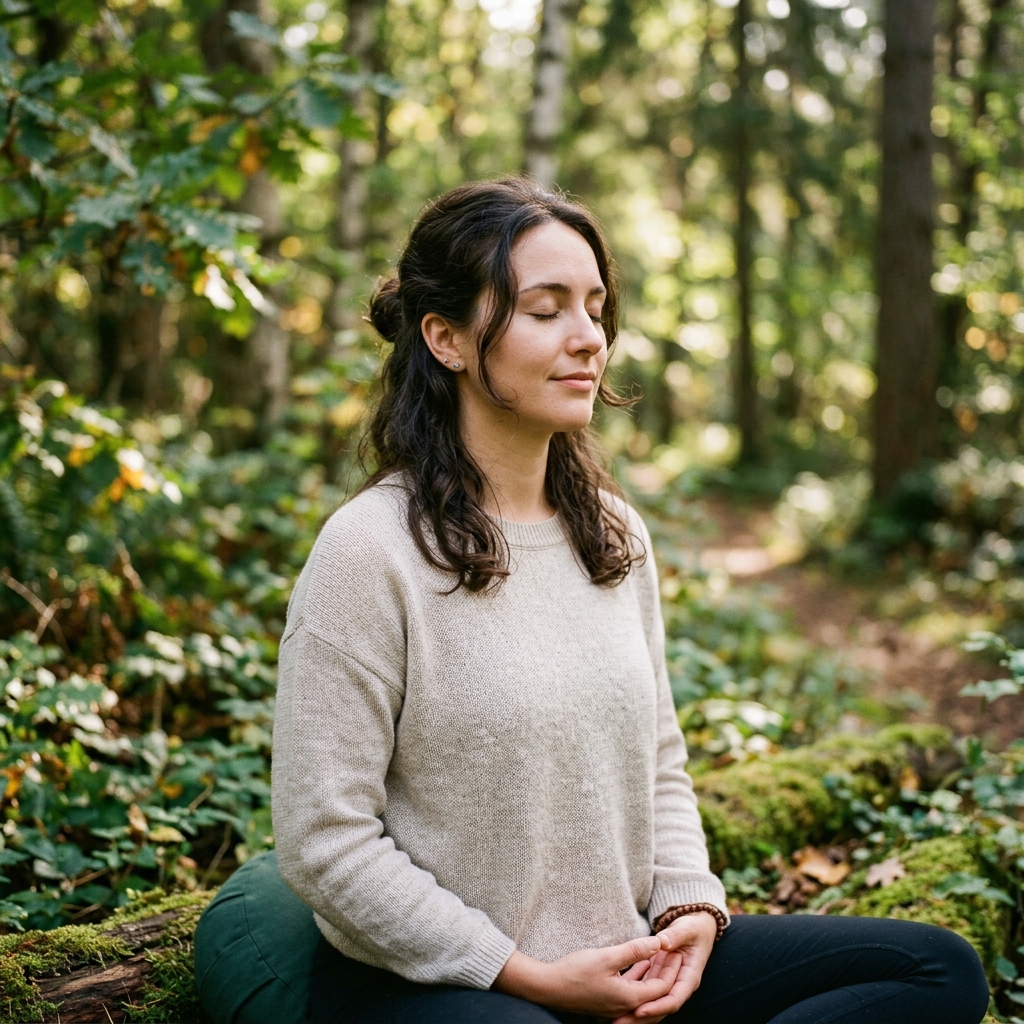
Friluftsliv (pronounced "free-loofts-liv") — Norwegian for "open-air life" — describes the cultural practice of spending time in nature as a normal part of daily and weekly life, not as exercise in the performance-oriented sense, but as passive restoration. Critically, friluftsliv does not pause for winter. Norwegian children are taught: "det finnes ikke dårlig vær, bare dårlig klær" — "there is no bad weather, only bad clothing."
The cultural expectation of outdoor time in winter provides several specific protective mechanisms:
- Natural daylight exposure: Even on grey winter days, outdoor light is far brighter than indoor lighting. A typical indoor environment delivers 100–500 lux; a grey winter day outdoors delivers 1,000–10,000 lux. This supports circadian rhythm maintenance and delays melatonin dysregulation.
- Movement in nature: Research consistently shows outdoor exercise has superior mood and anxiety effects compared to equivalent indoor exercise. The combination of physical movement, natural light, and natural sensory environment produces an additive effect.
- Environment mastery: Choosing to go outside in difficult weather — and returning warm and invigorated — builds the psychological quality researchers call "environment mastery": the belief you can function effectively despite difficult external conditions. This directly counteracts the learned helplessness that prolonged winter can otherwise generate.
How Do Koselig and Hygge Fight Winter Depression?
Nordic cultures counter the isolation and darkness of winter not by ignoring them but by building cultural infrastructure that makes warmth, connection, and beauty deliberately available during exactly the months they would otherwise be absent.
Koselig (Norwegian) and hygge (Danish) are cultural practices of creating warmth and togetherness during dark months — but they function as more than aesthetic preferences. They are, in psychological terms, environmental reappraisal practices: cultural methods for reframing a difficult environment as one containing opportunities for pleasure rather than only deprivation.
Norway's exceptionally high per-capita candle consumption is not coincidental. Candlelight produces warm, low-intensity light that suppresses alertness pathways, reduces amygdala threat-processing, and — when shared with others — activates social bonding mechanisms associated with evolutionary fire-sitting. The candle is both symbolic and physiologically active.
What Is Light Therapy, and Do Scandinavians Actually Use It?
Light therapy — 20–30 minutes of exposure to a bright light box at 10,000 lux in the morning — is the first-line evidence-based treatment for Seasonal Affective Disorder. In Norway and Sweden, light therapy boxes (dagslyslampe in Norwegian; dagsljuslampa in Swedish) are standard household items available in pharmacies and widely used from October through March.
A 2005 systematic review in the American Journal of Psychiatry confirmed that bright light therapy is as effective as antidepressant medication for SAD, with faster onset and a more favourable side-effect profile. Among Scandinavians, light therapy is not a clinical intervention — it is considered basic winter self-care, as normal as a winter jacket.
| Nordic Winter Practice | Mechanism | Evidence Level |
|---|---|---|
| Morning light therapy (10,000 lux, 20–30 min) | Resets circadian rhythm; suppresses excess winter melatonin | Equivalent to antidepressants for SAD (AJP, 2005) |
| Friluftsliv (daily outdoor time) | Natural daylight + movement + environment mastery | Superior mood effects vs. indoor exercise (multiple RCTs) |
| Koselig / Hygge evenings | Social connection + candlelight + environmental reappraisal | Positive wintertime mindset predicts wellbeing (Leibowitz, 2021) |
| Sauna culture | Endorphin release + social bonding + parasympathetic activation | 4–7× weekly sauna linked to significantly lower rates of depression |
| Consistent daily structure | Circadian anchor; prevents winter routine collapse | Routine maintenance is primary protective factor in SAD prevention |
What Role Does the Nordic Sauna Play in Winter Mental Health?
The Finnish sauna is not a wellness trend. It is a centuries-old social institution with a specific cultural function: a weekly or more frequent ritual of heat, silence, and social presence that serves as a complete reset — physical, emotional, and interpersonal. Finland has approximately one sauna per every two people in the country, distributed across all demographics.
A University of Eastern Finland study following 2,315 Finnish men over 20 years found that men using a sauna four to seven times per week had significantly lower rates of depression, anxiety, and psychosis compared to those using saunas once per week. The proposed mechanisms include endorphin release from rapid heat exposure, parasympathetic nervous system activation during the cooling phase, and the social bonding effects of a shared ritual performed without distraction.
In winter specifically, the sauna provides something that the dark season structurally lacks: a reliable source of warmth, physical pleasure, and unhurried social time.
How Can You Apply Scandinavian Winter Wellness If You Don't Live in Scandinavia?
- Morning light therapy: A 10,000 lux lamp used for 20–30 minutes within the first hour of waking is the highest-leverage single intervention for winter mood regulation. Use it at breakfast.
- Daily outdoor time, non-negotiable: Even 20 minutes of outdoor time daily during winter provides the circadian light signal that indoor lighting cannot replicate. Apply the Norwegian principle: appropriate clothing makes any weather manageable.
- Evening koselig practice: Replace overhead lighting with candles or lamps after 6 PM. Protect one evening per week for genuinely unhurried social time — no agenda, no productivity, no screens.
- Maintain structure: Winter's greatest psychological threat is routine collapse — later wake times, irregular meals, less movement, more isolation. A consistent anchor routine (same wake time, daily outdoor time, consistent evening wind-down) is the single most protective factor against seasonal mood disruption.
- Positive winter reappraisal: Actively notice what winter makes possible that other seasons don't — the particular quality of low winter light, the permission to slow down, the pleasure of genuine warmth when contrast with cold is present. This is documented cognitive strategy, not toxic positivity.
"Norwegians don't just survive winter. They have built a culture that requires winter — that creates meaning and pleasure specifically from the contrast between the darkness outside and the warmth within." — Dr. Kari Leibowitz, How to Winter
Conclusion: Winter Is Not the Enemy
Scandinavians stay well in winter not because they are immune to darkness, but because their cultures built a sophisticated collective response to it. That response is learnable. It consists of going outside every day regardless of weather, creating warmth and human connection deliberately every evening, maintaining the daily structure that anchors the circadian system, and reframing winter not as an absence of summer but as its own season with its own pleasures and requirements.
The tools are simple. The commitment is daily. And the evidence — from population data to neuroscience to clinical trials — consistently supports the same conclusion: winter is a season you can thrive in, but only if you actively choose to meet it on its own terms.
To go deeper, explore our guides on koselig, the Nordic sauna ritual, and friluftsliv.